
Let’s understand Internet of Medical Things (IoMT). In today’s digital age, the Internet of Things (IoT) has transformed the way we interact with everyday objects. Let it be from smart home devices to wearable fitness trackers. But what about the realm of healthcare? Enter the Internet of Medical Things (IoMT), a groundbreaking technology that promises to revolutionize the healthcare industry. It does it by connecting medical devices and equipment to the internet. In this blog, we will explore the transformative potential of IoMT and its implications for the future of healthcare delivery.
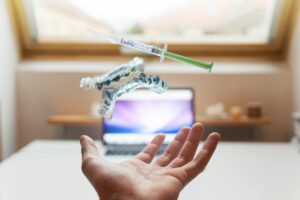
1. What is the Internet of Medical Things (IoMT)
The Internet of Medical Things refers to a network of medical devices, sensors, and software applications connected to the internet. It is allowing for the remote monitoring, management, and analysis of patient health data. From wearable fitness trackers and smart glucose monitors to hospital equipment and telemedicine platforms. IoMT encompasses a wide range of technologies designed to improve patient care, enhance clinical outcomes, and streamline healthcare processes.
2. How does Internet of Medical Things (IoMT) work
IoMT devices collect real-time data on various aspects of patient health, such as vital signs, medication adherence, and disease progression. It transmits this information securely to healthcare providers via the internet. Advanced analytics and machine learning algorithms can then analyze this data to identify trends, predict health outcomes, and personalize treatment plans for individual patients. By enabling continuous monitoring and proactive intervention, IoMT holds the potential to revolutionize preventive care, chronic disease management, and remote patient monitoring.
3. Key applications of (Internet of Medical Things) IoMT
Remote Patient Monitoring:– IoMT devices enable healthcare providers to monitor patients’ health status remotely, allowing for early detection of health issues, timely interventions, and reduced hospital readmissions.
Telemedicine and Virtual Care:– IoMT facilitates virtual consultations and telemedicine appointments, enabling patients to access healthcare services from the comfort of their homes and improving access to care, particularly in underserved communities.
Chronic Disease Management:– IoMT devices empower patients with chronic conditions to monitor their health parameters, track medication adherence, and receive personalized guidance from healthcare providers, leading to better disease management and improved quality of life.
Health and Wellness Tracking:– IoMT wearables and mobile health apps enable individuals to track their fitness levels, sleep patterns, and overall well-being, promoting proactive health management and lifestyle modifications.
4. Benefits of IoMT
Improved Patient Outcomes:– By facilitating timely interventions, personalized treatment plans, and remote monitoring. IoMT has the potential to improve patient outcomes, reduce healthcare costs, and enhance the overall quality of care.
Enhanced Operational Efficiency:– IoMT streamlines healthcare workflows, automates routine tasks, and reduces administrative burdens on healthcare providers, leading to greater operational efficiency and resource optimization.
Empowered Patients:– IoMT empowers patients to take an active role in their healthcare journey. It should be fostering greater engagement, adherence to treatment plans, and self-management of chronic conditions.
5. Challenges and consideration
While IoMT holds great promise for the future of healthcare, several challenges and considerations must be addressed. It should be including data privacy and security concerns, interoperability issues, regulatory compliance, and the need for healthcare professionals to adapt to new technologies and workflows.
6. IoMT and Emergency Medicine
In emergency medicine, every second counts, and the Internet of Medical Things (IoMT) is revolutionizing. It is how emergency medical services (EMS) respond to crises. With IoMT -enabled devices and systems, EMS teams can access real-time patient data,. They can communicate seamlessly with hospitals, and streamline the entire emergency care process.
Real Time Monitoring and Diagnosis – IoMT devices, such as wearable health monitors and connected ambulance systems. It provides EMS personnel with vital patient information even before they arrive on the scene. These devices can track metrics like heart rate, blood pressure, and oxygen saturation. It is allowing EMS teams to assess the severity of a patient’s condition and make more informed decisions about treatment.
Communication and Coordination – IoMT technologies facilitate seamless communication and coordination between EMS teams, hospitals, and other healthcare providers. Connected ambulances equipped with telemedicine capabilities enable paramedics to consult with emergency room. Physicians in real-time, share patient data, and receive guidance on treatment protocols while en route to the hospital.
Remote triage and telemedicine – In situations where immediate transport to a hospital may not be feasible. IoMT-enabled telemedicine platforms enable remote triage and virtual consultations with medical professionals. Paramedics can use portable diagnostic devices and telehealth apps to conduct assessments. One can communicate with on-call physicians, and determine the appropriate level of care for patients in the field.
7. IoMT and Patient Engagements
Patient engagement is a critical component of modern healthcare. IoMT technologies are empowering patients to take a more active role in managing their health and well-being. Through access to personalized health data, interactive health coaching, and secure communication with healthcare providers. The patients can make more informed decisions about their care and actively participate in their healthcare journey.
Access to personalized health data – IoMT devices, such as wearable fitness trackers and remote monitoring tools, provide patients with real-time access to their health data, including metrics like activity levels, heart rate, and sleep patterns. By tracking their progress and identifying trends over time. Patients gain valuable insights into their health and can make informed decisions about lifestyle changes and treatment plans.
Interactive health coaching – Many IoMT platforms offer interactive health coaching features. It provides personalized guidance and support to patients in achieving their health goals. Through educational content, goal setting, and progress tracking, patients receive tailored recommendations. Also encouragement to adopt healthier habits and adhere to treatment regimens.
Secure communication with healthcare providers – IoMT technologies facilitate secure communication between patients and healthcare providers. It is through patient portals, telehealth platforms and mobile health apps. Patients can schedule appointments, request prescription refills. Also exchange messages with their care team, enhancing convenience and accessibility to healthcare services.
Conclusion
The Internet of Medical Things (IoMT) represents a transformative force in healthcare, offering unprecedented opportunities. It is to improve patient care, enhance clinical outcomes, and revolutionize the way healthcare is delivered. By leveraging the power of connectivity, data analytics, and advanced technology. IoMT has the potential to drive innovation, empower patients. It will create a more efficient and sustainable healthcare system for the future. As IoMT continues to evolve, it will be crucial for stakeholders across the healthcare ecosystem. It is to collaborate, innovate, and embrace this transformative technology to unlock its full potential for the benefit of patients worldwide.
You may also like
Are healthy drinks really healthy?
Fitness Gamification : Turn your exercises into play
Hygge : Embrace great living for health and happiness
Epigenetics and parenting : Nurture the best generational health
Holacracy in parenting : apply the best Organisational principles